A new Software Driven external Sensor System for Industrial Robots
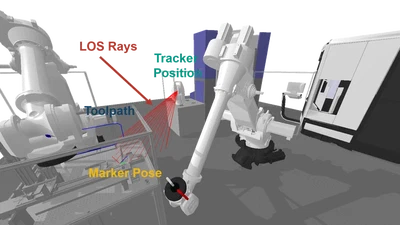
For decades, laser tracker and total stations have been the state of the art to measure externally the position disturbances in robotic systems. High system costs limit their usage …
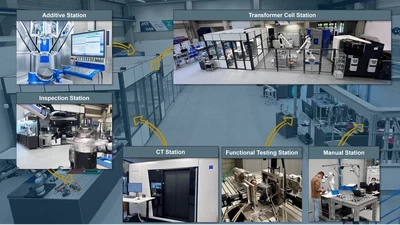
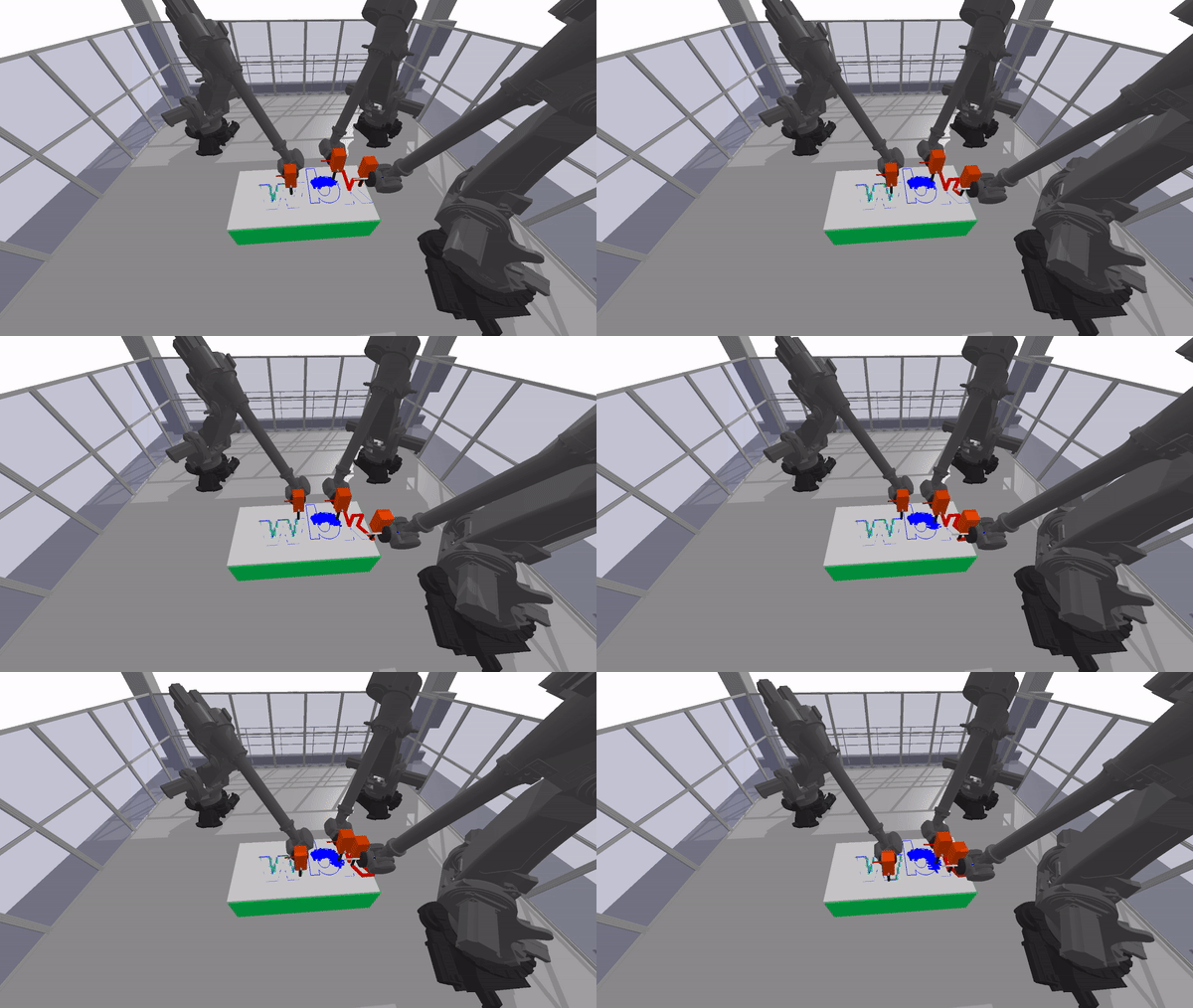
In recent years, modular and reconfigurable manufacturing systems have gained attention for their fast adaptability to product changes. While system design is now highly automated, …
The advancement of Industry 4.0 necessitates the abstraction of production processes to develop software-defined value streams. Existing approaches often suffer from limitations …
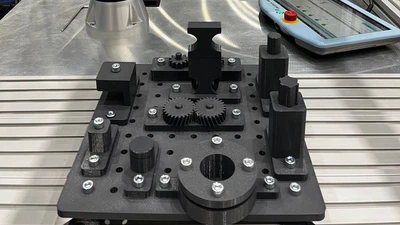
The wbk Industrial Assembly Task Board is a modular benchmark designed to address the complexities of robotic assembly tasks beyond the traditional peg-in-hole paradigm. This task …
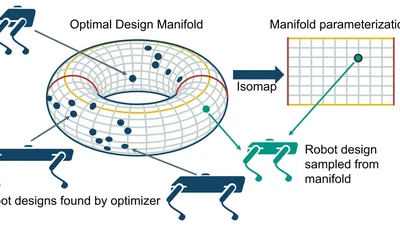
Introduces the optimal design manifold for understanding and optimizing robotic system design, enabling selection of the most practical optimal design.
Cycle time is critical in robotic cells where material handling often presents a bottleneck and in turn depends on the cell layout. Optimizing robot cell layouts is therefore …
To support the circular economy, robotic systems must not only assemble new products but also disassemble end-of-life (EOL) ones for reuse, recycling, or safe disposal. Existing …
Resource depletion and environmental harm highlight the need for more sustainable manufacturing methods like circular manufacturing. Circular manufacturing methods such as …
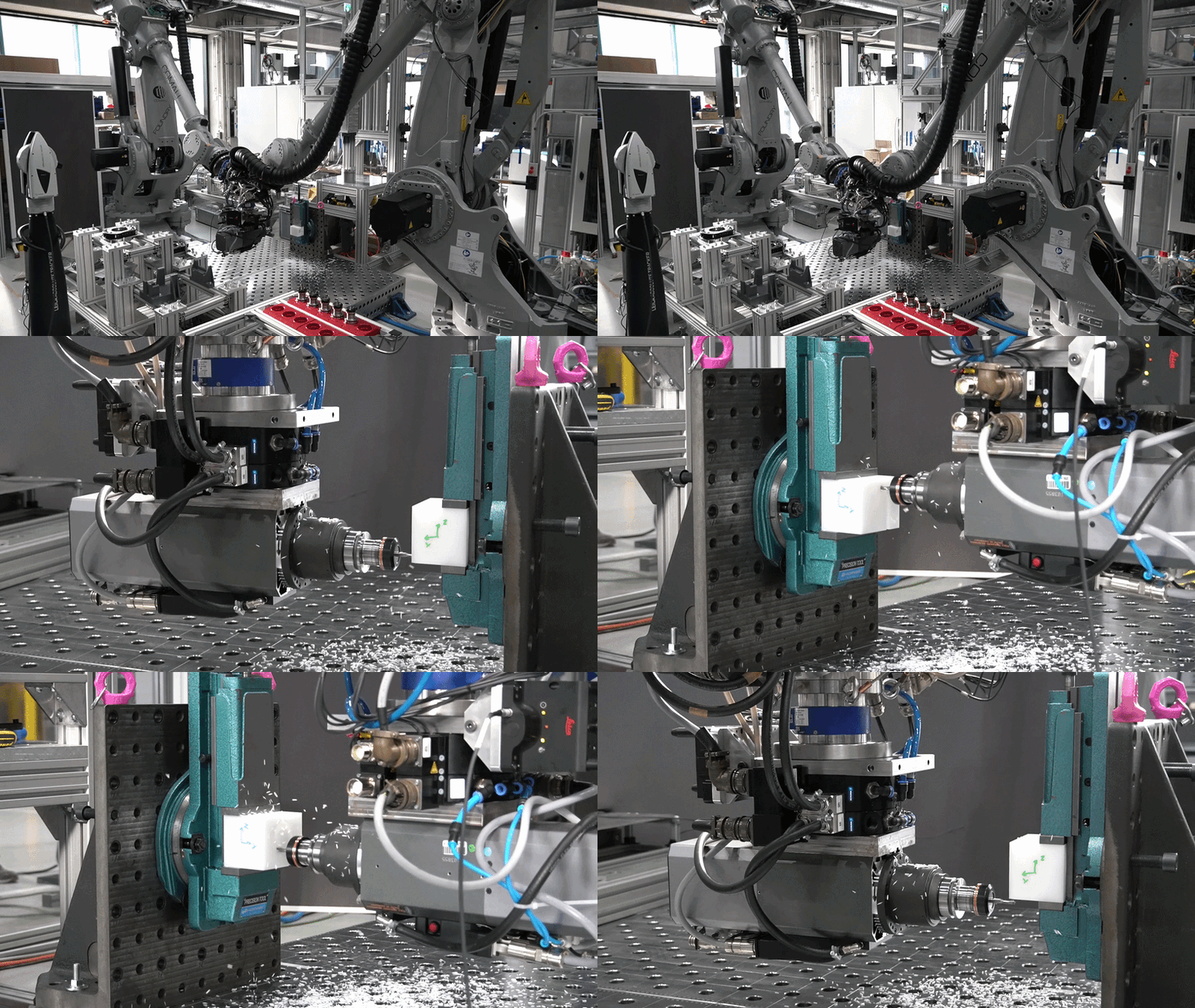
Industrial robots are commonly used in various industries due to their flexibility. However, their adoption for machining tasks is minimal because of the low dynamic stiffness …
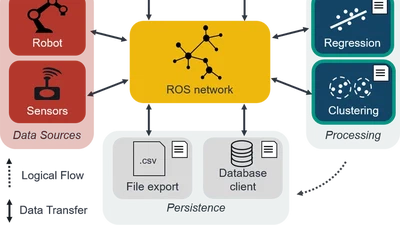
This paper presents a deployment concept that aims to overcome the challenges in the implementation of Machine Learning (ML) models in manufacturing and industrial environments. In …
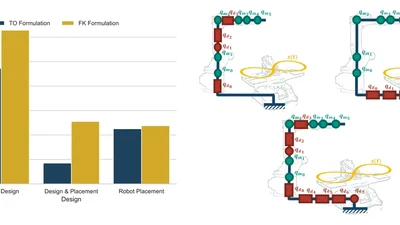
Unified formulation for simultaneous robot design and cell layout optimization, achieving up to eight times better solutions than separate optimization.
The deployment of machine learning models in manufacturing systems presents unique challenges, necessitating robust testing procedures to ensure reliable and efficient operation. …
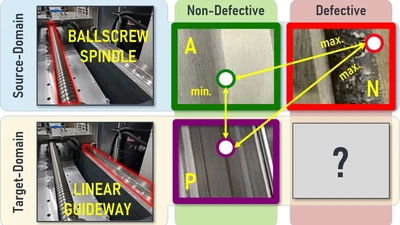
Novel domain adaptation approach for surface defect detection that handles partial data availability using modified triplet loss and two-stage training.
Presents a quasi time-optimal path tracking approach for pneumatic robots that accounts for third-order actuator dynamics.
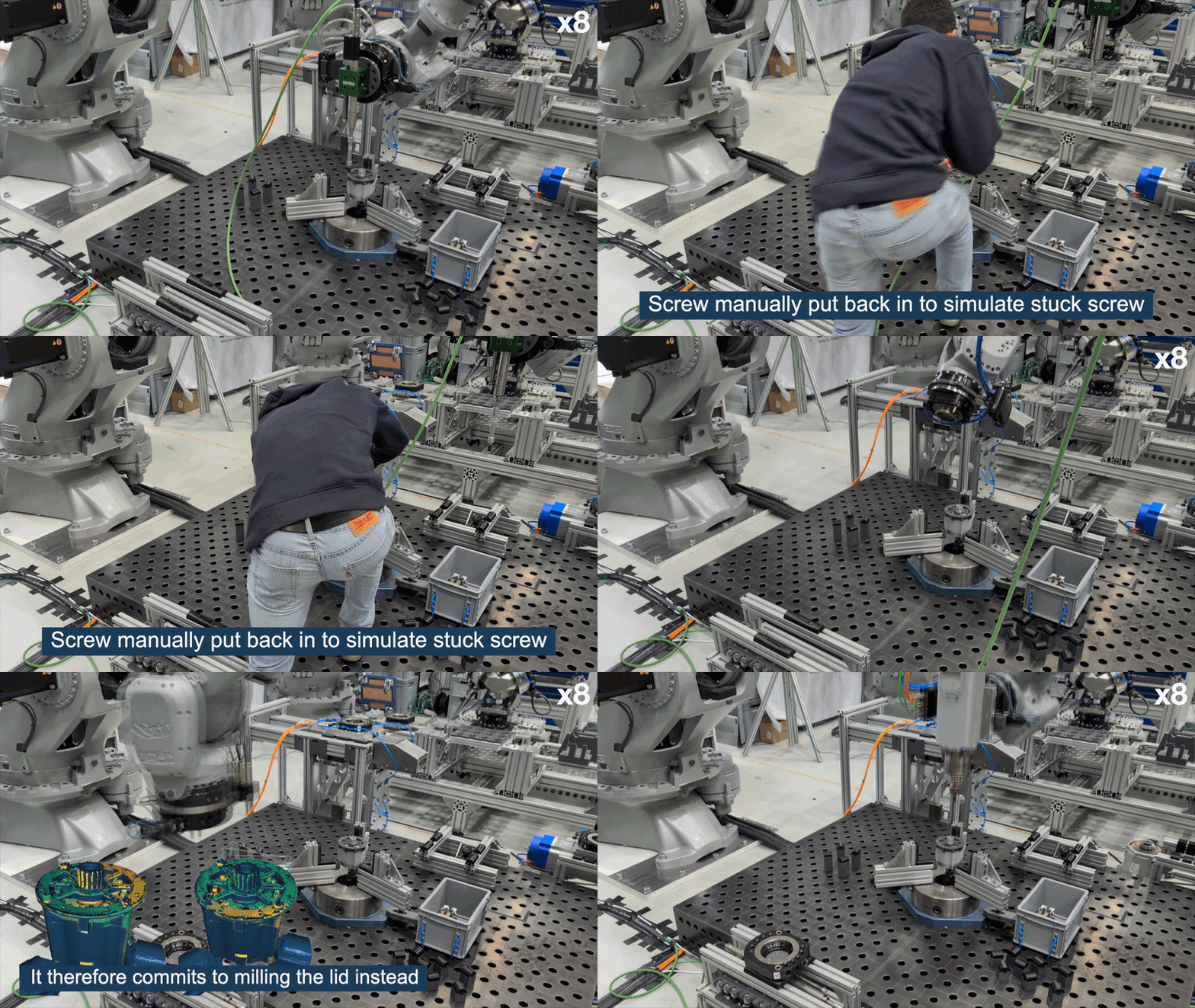
Generalized approach to destructive disassembly planning that automatically derives destructive actions from symbolic and geometric models.
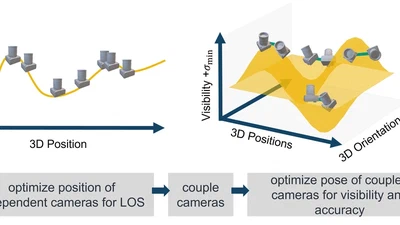
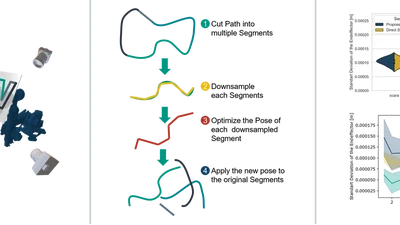
Novel optical tracking system with optimized camera placement for high-accuracy industrial robot tasks.
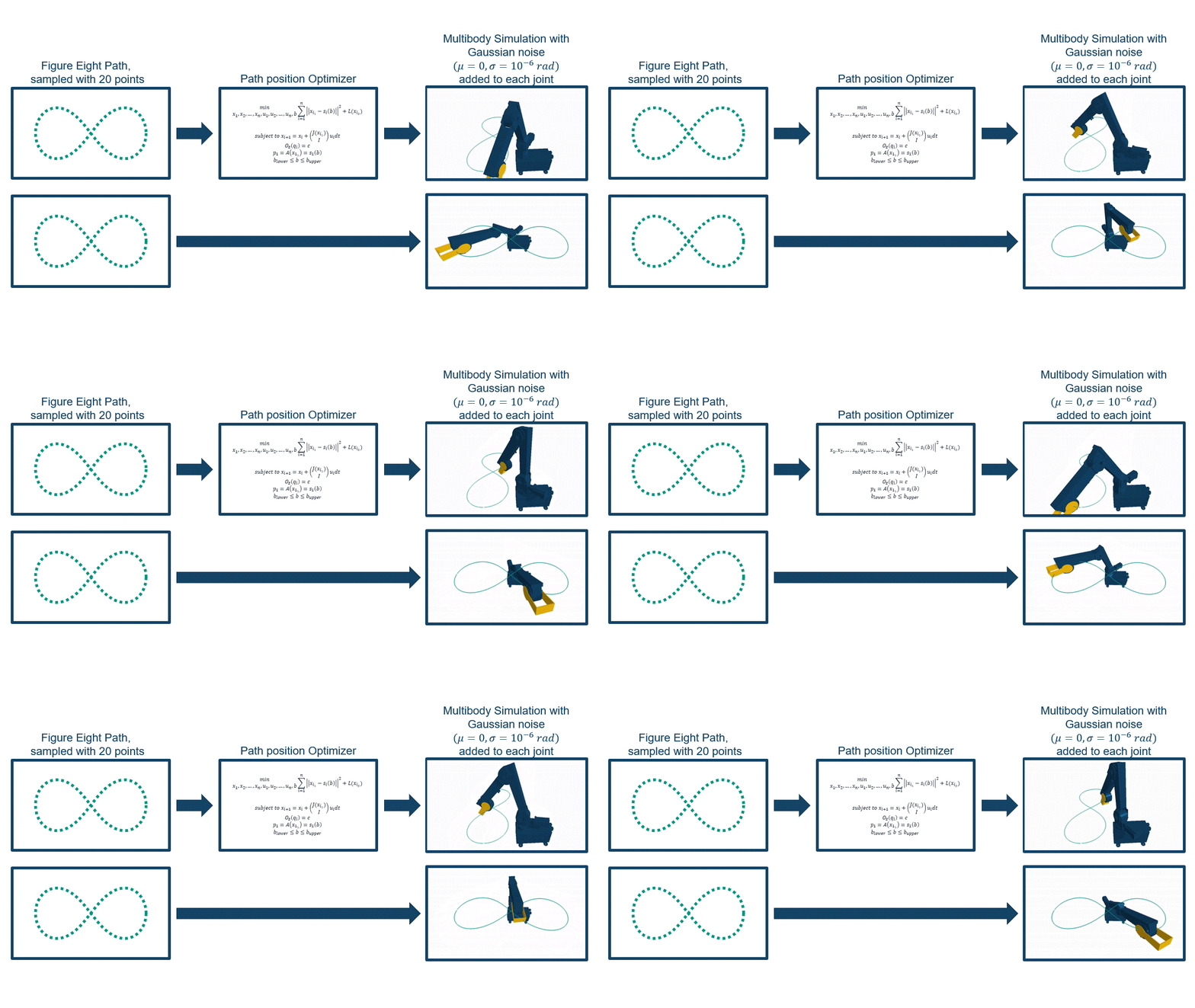
Proposes using a second robot to adjust workpiece position during manufacturing, forming a high-precision dual-robot system.
When choosing an industrial robot, repeatability is often one of the most important decision factors. But repeatability is not a global property, instead, it strongly depends on …
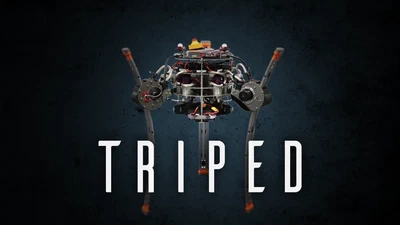
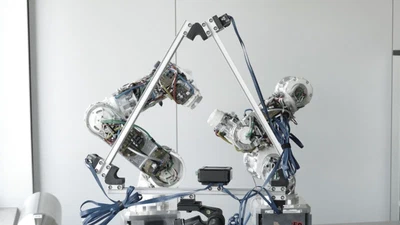
Due to a predisposition of DNA to generate symmetric anatomy, there are no tripedal animals in nature. Yet, threelegged walking might be the sweet spot between the energy …
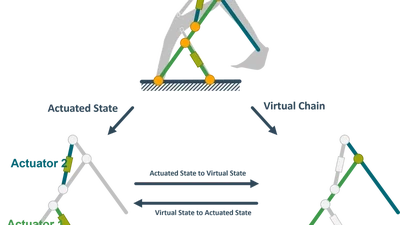
Python package for kinematic modeling of serial-parallel hybrid robots.